
Selecting the right submersible pump for mining and construction applications is a decision with consequences that ripple through project timelines, operational budgets, and safety records. A correctly specified pump delivers years of reliable service; an incorrectly selected one becomes a recurring source of downtime, maintenance headaches, and cost overruns. For B2B buyers, project engineers, and procurement managers responsible for dewatering, slurry handling, or groundwater control, this comprehensive selection guide covers the critical technical parameters, material choices, and application-specific considerations that should inform every submersible pump purchase in 2026.
The global submersible pump market is valued at approximately $14.2 billion in 2026, with mining and construction collectively accounting for 35% of demand. Chinese manufacturers, including NOVAPUMP, have emerged as dominant suppliers in these segments, offering cost-effective solutions that meet or exceed the reliability requirements of the world's most demanding job sites—from Chilean copper mines to Southeast Asian infrastructure mega-projects.
Understanding Submersible Pump Fundamentals
Unlike surface-mounted pumps that must overcome suction lift limitations, submersible pumps operate fully immersed in the fluid they are pumping. This configuration provides several inherent advantages for mining and construction: elimination of suction lift concerns (pumps can operate at virtually any depth), self-priming operation (no manual priming required), quieter operation (water dampens noise), and space efficiency (no separate pump house required). However, submersible pumps also face unique challenges: all electrical components must be fully sealed against water ingress, impellers handle abrasive-laden fluids, and service access requires pulling the entire unit from the installation point.
Application-Specific Selection Criteria
Mining Dewatering
Mine dewatering presents the most demanding submersible pump application. Pumps may operate continuously at depths exceeding 300 meters in groundwater with high mineral content, suspended solids, and pH levels ranging from highly acidic (2-3 pH in sulfide mines) to alkaline. Key specifications for mining dewatering pumps include:
- Head capacity: Must match the total dynamic head (TDH) from the pump installation depth to the discharge point, accounting for friction losses in the rising main. For deep mines, multistage submersible pumps capable of 400+ meters TDH are standard.
- Solids handling: Mining groundwater inevitably contains suspended solids. Pumps should handle 2-5% solids by weight without clogging or excessive wear. Semi-open impellers with hardened wear plates offer the best balance of solids passage and hydraulic efficiency.
- Materials: Cast iron with high-chrome wear rings is the baseline. For acidic mine water, duplex stainless steel or CD4MCu construction is essential. The pump manufacturer should provide detailed material compatibility data for the specific mine water chemistry analysis.
Construction Site Dewatering
Construction dewatering is characterized by variable conditions, temporary installations, and frequent relocation of pumping equipment. Pumps encounter groundwater, rainwater, bentonite slurry (from piling operations), and concrete washout water. Selection priorities for construction pumps differ from mining:
- Portability: Pumps must be lightweight enough for manual handling by a two-person crew. Compact 2-5 HP submersible pumps weighing under 30 kg are the workhorses of construction site dewatering.
- Robustness against mishandling: Construction site pumps endure rough handling, frequent starts/stops, and occasional dry running. Cast iron construction with built-in thermal overload protection and double mechanical seals is a proven combination.
- Solids passage: Construction site water contains not just sand and silt but also construction debris—gravel, small stones, and occasionally forgotten tools. Vortex impellers offer the best clog resistance for construction applications, sacrificing some efficiency for operational reliability.
Slurry Pumping
When the pumped fluid contains high concentrations of abrasive solids—tailings in mining, drilling mud in construction, or sand in dredging—standard submersible pumps are insufficient. Heavy-duty slurry pumps are specifically engineered for these conditions, with wear-resistant materials, oversized bearing assemblies, and lower operating speeds to reduce erosive wear. High-chrome white iron (ASTM A532 Class III) impellers and volutes with Brinell hardness ratings of 600+ BHN are the industry benchmark.
Material Selection Matrix
| Material | Cost Index | Corrosion Resistance | Abrasion Resistance | Best Application | Limitations |
|---|---|---|---|---|---|
| Cast Iron (GG25) | 1x (Base) | Low | Moderate | Clean water, general dewatering | Not for acidic/corrosive fluids |
| Ductile Iron (GGG40) | 1.2x | Low | Good | Construction dewatering | Not for highly corrosive fluids |
| 304 Stainless Steel | 1.8x | Good | Moderate | Municipal water, food-grade | Pitting in chloride environments |
| 316 Stainless Steel | 2.3x | Very Good | Moderate | Seawater, chemical, aquaculture | Higher initial cost |
| Duplex SS (CD4MCu) | 3x | Excellent | Very Good | Mining, desalination, harsh chemical | Premium price, longer lead time |
| High-Chrome White Iron | 2.5x | Moderate | Excellent (600+ BHN) | Slurry, mine tailings, dredging | Brittle, not for impact loads |
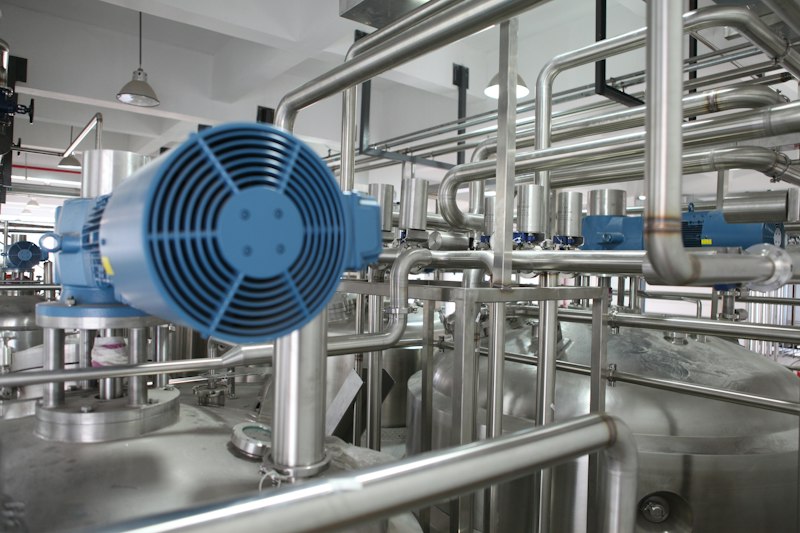
Heavy-duty submersible dewatering pump installation at a deep excavation site—proper pump selection critical for reliable construction site dewatering operations.
Critical Selection Factors Often Overlooked
- Cable and electrical system specification. The submersible pump cable is often treated as an afterthought but is one of the most common failure points. For deep installations, specify double-jacketed submersible cable rated for the full submersion depth. Cable voltage drop over long runs can reduce motor terminal voltage below acceptable limits; always calculate voltage drop for the full cable length and upsize cable cross-section if necessary.
- Minimum submersion depth and cooling requirements. Most submersible pumps rely on the pumped fluid for motor cooling. Operating a pump with insufficient submersion can overheat the motor in minutes. Check the manufacturer's minimum submersion depth specification—typically 0.5-1 meter above the motor top—and ensure it is achievable at the lowest expected water level.
- Liquid temperature effects. Standard submersible pumps are rated for water temperatures up to 40°C. In geothermal applications, deep mine dewatering, or industrial process pumping, fluid temperatures may exceed this limit. High-temperature submersible pumps with Class H insulation and special bearing lubricants are required for temperatures above 40°C.
- NPSH (Net Positive Suction Head) considerations. While NPSH is less critical for submersible pumps compared to surface pumps, cavitation can still occur in high-flow, low-submergence conditions or when pumping hot fluids. Verify the pump's NPSH requirement against the available NPSH in the installation.
NOVAPUMP Submersible Pump Solutions
NOVAPUMP offers a comprehensive range of submersible pumps engineered for mining and construction applications. Our product line includes borehole submersible pumps (2-30 HP), heavy-duty dewatering pumps (1-50 HP) in cast iron and stainless steel, and slurry-duty pumps with high-chrome wear components. All NOVAPUMP submersible pumps feature double mechanical seals with oil chamber leakage detection, built-in thermal overload protection, and full compatibility with IE3/IE4 energy-efficient motors. With ISO 9001 certification and installations operating across mining and construction sites in Africa, the Middle East, and Southeast Asia, NOVAPUMP delivers the reliability that demanding applications require at a competitive price point.
Related Articles
- Chinese Water Pump Manufacturers in 2026: Global Market Share, Export Capabilities, and Strategic Sourcing Guide for B2B Buyers – Growing demand for submersible and dewatering pumps in Sub-Saharan Africa's booming mining and construction sectors.
- IE4/IE5 Energy Efficiency Standards for Industrial Pumps: What B2B Buyers and Procurement Managers Need to Know 2026 – How to specify energy-efficient motors for submersible pump applications.
- IE4/IE5 Energy Efficiency Standards for Industrial Pumps: What B2B Buyers and Procurement Managers Need to Know 2026 – Essential certification knowledge for submersible pump procurement.
- Vertical Turbine Pumps Selection Guide 2026: Deep Well & Municipal Water Supply Applications for B2B Buyers – Step-by-step sourcing guide for procuring submersible pumps from Chinese manufacturers.