
Southeast Asia's agricultural sector is undergoing a quiet but powerful transformation. Across Thailand's rice paddies, Vietnam's coffee plantations, and Indonesia's palm oil estates, solar water pumps are replacing diesel-powered systems at an accelerating pace. For B2B buyers, distributors, and agricultural cooperatives sourcing pumping solutions, understanding the region-specific applications, economics, and technical requirements of solar water pumps is now essential for making informed procurement decisions.
The ASEAN solar water pump market is projected to exceed $850 million by 2028, growing at a CAGR of 24.3% from 2024. This growth is fueled by a convergence of factors: declining solar panel costs, rising diesel prices, government subsidy programs, and the unique geographic advantage of Southeast Asia's year-round sunshine. With an average of 4.5-5.5 peak sun hours per day across most ASEAN countries, the region offers near-ideal conditions for solar pumping systems.
Why Solar Water Pumps Are Winning in Southeast Asia
The business case for solar water pumps in Southeast Asia rests on three pillars: cost economics, energy independence, and environmental compliance. Let's examine each in detail.
The Diesel Replacement Economics
For agricultural operations currently relying on diesel pumps, the math is compelling. A typical 5 HP diesel irrigation pump operating 8 hours daily consumes approximately 2.5-3 liters of diesel per hour. At current ASEAN diesel prices of $0.80-1.20 per liter, daily fuel costs range from $16-29. Over a 300-day growing season, that amounts to $4,800-8,700 annually in fuel alone—not including maintenance, oil changes, and downtime. A comparable solar pumping system with a 5 HP pump and 3-4 kW solar array typically achieves payback within 18-30 months, after which operating costs approach zero.
Government Incentives Driving Adoption
Several ASEAN governments have implemented aggressive subsidy programs:
- Thailand: The Department of Alternative Energy Development and Efficiency (DEDE) offers 30-50% capital subsidies for solar irrigation systems through its Solar Pump Promotion Program, targeting 10,000+ installations by 2027.
- Vietnam: The Ministry of Agriculture and Rural Development subsidizes 40-60% of solar pump costs for coffee and rice farmers in the Central Highlands and Mekong Delta regions.
- Indonesia: The Ministry of Energy provides concessional financing through state banks for solar pumping in off-grid agricultural zones, with interest rates as low as 3% per annum.
- Philippines: The Department of Agriculture's Solar-Powered Irrigation System (SPIS) program has deployed over 1,000 systems since 2022, with plans for 5,000+ more by 2028.
Key Applications by Country and Crop
Southeast Asia's diverse agricultural landscape demands tailored solar pumping solutions. Below is a breakdown of the primary applications by country:
Thailand: Rice Irrigation and Aquaculture
Thailand's central plains require reliable water supply for rice cultivation, while its eastern seaboard supports a growing aquaculture industry. Solar submersible pumps (2-7.5 HP) paired with surface storage tanks are the dominant configuration for rice irrigation. For shrimp and fish farms, solar-powered circulation pumps operating 6-10 hours daily have demonstrated 50-70% reductions in energy costs compared to grid electricity, which is particularly valuable in remote coastal areas with unreliable power supply.
Vietnam: Coffee and High-Value Crops
The Central Highlands coffee belt requires precise irrigation during the November-March dry season. Solar pumping systems with variable frequency drives (VFDs) allow farmers to match water delivery to crop requirements, improving both yield and quality. Surface solar pumps in the 3-5 HP range, drawing from boreholes or reservoirs, are the most common specification. Vietnamese coffee exporters increasingly require sustainability certifications (Rainforest Alliance, 4C), and solar irrigation contributes directly to these credential requirements.
Indonesia and Malaysia: Palm Oil and Remote Estates
Palm oil plantations spanning thousands of hectares in Sumatra and Kalimantan present unique pumping challenges. Solar systems must power both irrigation and fertigation (fertilizer injection) applications. Hybrid solar-diesel configurations are popular here, where solar provides base-load pumping and diesel generators serve as backup during extended cloudy periods. In Peninsular Malaysia, solar pumps are increasingly deployed for domestic water supply in rural Orang Asli communities through government CSR-linked programs.
Philippines: Multiple Small-Scale Applications
The archipelagic geography of the Philippines demands decentralized solutions. Solar pumps serve smallholder farms (typically 1-3 hectares), community water systems on remote islands, and livestock watering in upland areas. The market favors compact, portable solar pumping kits (0.5-2 HP) that can be installed without specialized technical expertise.
Technical Specifications: What Buyers Should Look For
When sourcing solar water pumps for Southeast Asian applications, procurement professionals should evaluate specifications across these critical parameters:
| Specification | Small-Scale (0.5-2 HP) | Medium-Scale (3-7.5 HP) | Large-Scale (10+ HP) |
|---|---|---|---|
| Typical Application | Smallholder farms, household supply | Medium farms, community systems | Plantations, municipal supply |
| Solar Array Size | 0.8-2.5 kWp | 3-8 kWp | 10-30+ kWp |
| Daily Water Output | 5-30 m³/day | 30-120 m³/day | 120-500+ m³/day |
| Pump Type | DC submersible, surface | AC/DC hybrid, submersible | AC 3-phase with VFD |
| MPPT Controller | Integrated (built-in) | External, IP65 rated | Industrial-grade, IP66 |
| Price Range (FOB China) | $400-1,200 | $1,500-5,000 | $6,000-25,000+ |
| Typical Payback Period | 12-18 months | 18-30 months | 24-42 months |
Climate Considerations: Designing for the Tropics
Southeast Asia's tropical climate presents specific engineering challenges that buyers must account for in their specifications:
- Humidity and Corrosion: With average humidity exceeding 80% in coastal and equatorial zones, all pump components—especially electrical connections, controller enclosures, and mounting structures—must be rated for tropical conditions. Stainless steel (304 or 316 grade) pump bodies and corrosion-resistant fasteners are strongly recommended over galvanized steel.
- Monsoon Resilience: Solar panel mounting structures must withstand wind loads of 120-160 km/h in typhoon-prone areas (Philippines, Vietnam). Ground-mounted arrays require reinforced concrete foundations, not simple earth anchors.
- Lightning Protection: Southeast Asia experiences some of the highest lightning flash densities globally. Solar pumping installations must include DC surge protection devices (SPDs) on both the array and pump sides, plus proper grounding systems.
- Temperature De-rating: While solar panels perform slightly less efficiently in high ambient temperatures, the consistent solar irradiation in the region more than compensates. Buyers should specify pumps with thermal overload protection rated for 50°C ambient conditions.
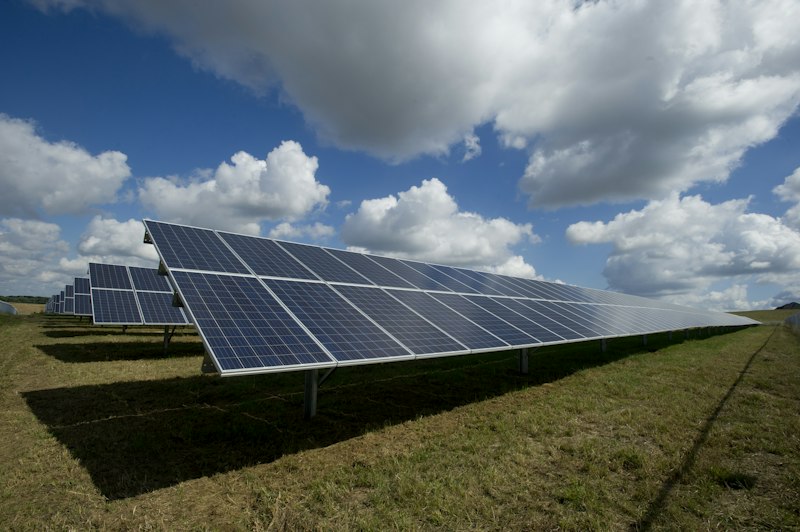
Solar-powered irrigation system in a Southeast Asian agricultural setting—representative of the growing adoption of renewable energy pumping solutions across ASEAN markets in 2026.
Procurement Best Practices for Southeast Asian Solar Pump Projects
Based on field experience across the region, here are five procurement recommendations for B2B buyers:
- Request regional performance data. Pump specifications measured in laboratory conditions do not always translate to tropical field performance. Ask suppliers for performance test data from installations in comparable Southeast Asian climates, including operation during monsoon conditions.
- Prioritize system integration capability. The solar panel, MPPT controller, and pump must be matched as an integrated system. Buying components separately from different suppliers often results in mismatched specifications and suboptimal performance. Chinese manufacturers like NOVAPUMP offer pre-configured solar pump kits with all components optimized for compatibility.
- Verify after-sales support networks. Even the best equipment requires maintenance. Ensure your supplier has authorized service partners or distributors in the target ASEAN country. Parts availability for controllers and pump seals is particularly critical.
- Consider hybrid-ready systems. Even if the current project is 100% solar, specifying a hybrid-ready pump that can accept grid or generator backup through an automatic transfer switch provides operational flexibility and insurance against extended cloudy periods.
- Check certification requirements. Solar panels should carry IEC 61215 and IEC 61730 certifications. Pumps should meet ISO 9906 for hydraulic performance. Some ASEAN countries also require local certification marks (e.g., TISI in Thailand, SNI in Indonesia).
The NOVAPUMP Advantage for ASEAN Markets
As a leading Chinese pump manufacturer with an expanding presence in Southeast Asia, NOVAPUMP offers solar water pump solutions specifically engineered for tropical agricultural applications. Our solar pump range includes DC and AC/DC hybrid models from 0.5 HP to 30 HP, with complete solar panel, controller, and mounting kits available. All systems feature IP65-rated MPPT controllers with dry-run protection, and pumps are constructed with 304 stainless steel for long-term corrosion resistance in humid tropical environments. With established distributor networks in Thailand, Vietnam, Indonesia, and the Philippines, NOVAPUMP provides both competitive FOB pricing and reliable regional after-sales support.
Related Articles
- Solar Water Pump Applications in Southeast Asia: A Comprehensive Buyer's Guide for Agricultural & Rural Water Supply 2026 – Detailed analysis of solar pump economics and adoption patterns across ASEAN agricultural sectors.
- Solar Water Pump Applications in Southeast Asia: A Comprehensive Buyer's Guide for Agricultural & Rural Water Supply 2026 – Strategic overview of the broader pump market across ASEAN economies.
- IE4/IE5 Energy Efficiency Standards for Industrial Pumps: What B2B Buyers and Procurement Managers Need to Know 2026 – How premium-efficiency motor standards apply to solar and electric pump systems.
- Solar Water Pump Applications in Southeast Asia: A Comprehensive Buyer's Guide for Agricultural & Rural Water Supply 2026 – Essential certification knowledge for importers sourcing pumps for Southeast Asian markets.